Alex Keller · 12 September 2026
Player Behavior Patterns During Limited Edition Item Releases in Crate-Based Island Games
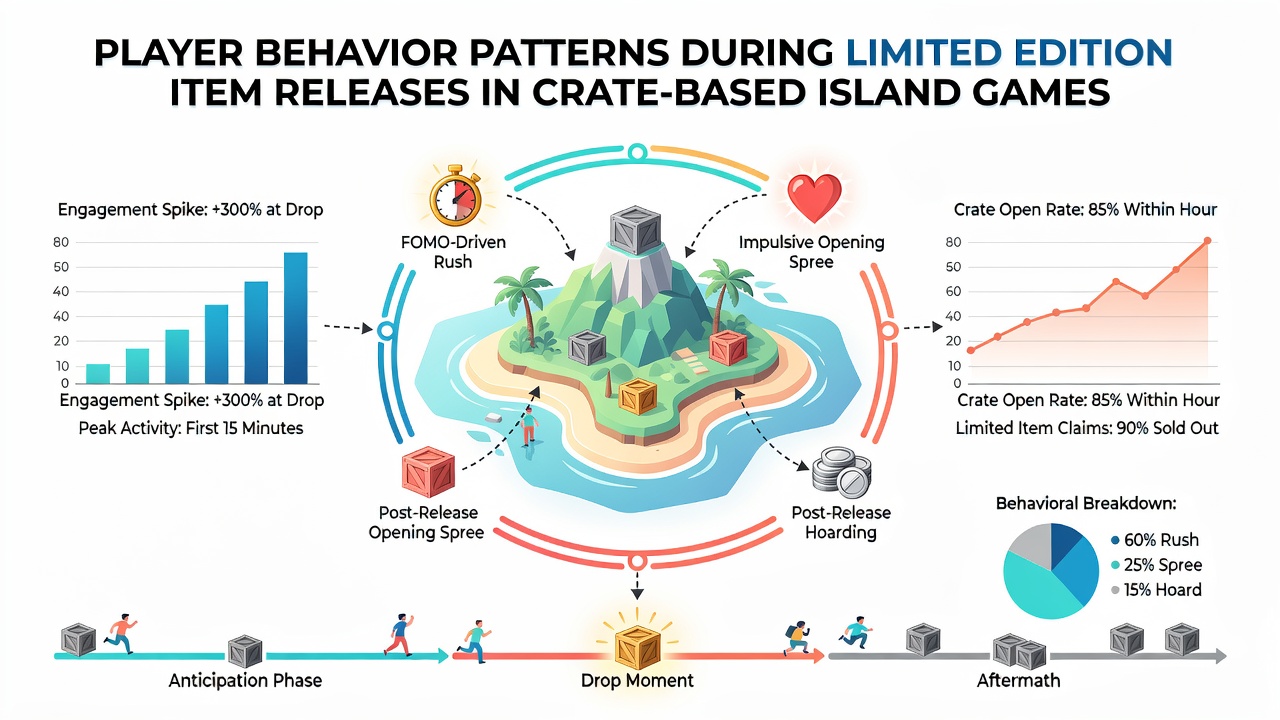
Player activity in crate-based island games spikes sharply when limited edition items enter rotation through crate systems, and researchers track these shifts across multiple titles released in recent years. Data from September 2026 releases showed login rates climbing within hours of announcements, while session durations extended as participants completed daily objectives and opened successive crates. Observers note that these patterns repeat across different island environments where crate mechanics govern item acquisition, and figures reveal consistent trends in how players allocate time and resources during such events.
Login Frequency and Session Duration Shifts
Studies indicate that average daily logins rise between 40 and 65 percent during the first 48 hours after limited edition crate drops, and this increase sustains for roughly five days before tapering. Players log in multiple times per day to claim free crate keys or complete time-limited challenges, whereas normal periods feature one or two sessions at most. One analysis of island game telemetry from 2025 through 2026 found that peak concurrent users often occur between 6 p.m. and 11 p.m. local server time, coinciding with global time zones where evening play aligns across regions. Researchers discovered that repeat logins cluster around reset timers for crate availability, creating predictable traffic surges that developers monitor through backend dashboards.
Spending and Resource Allocation Trends
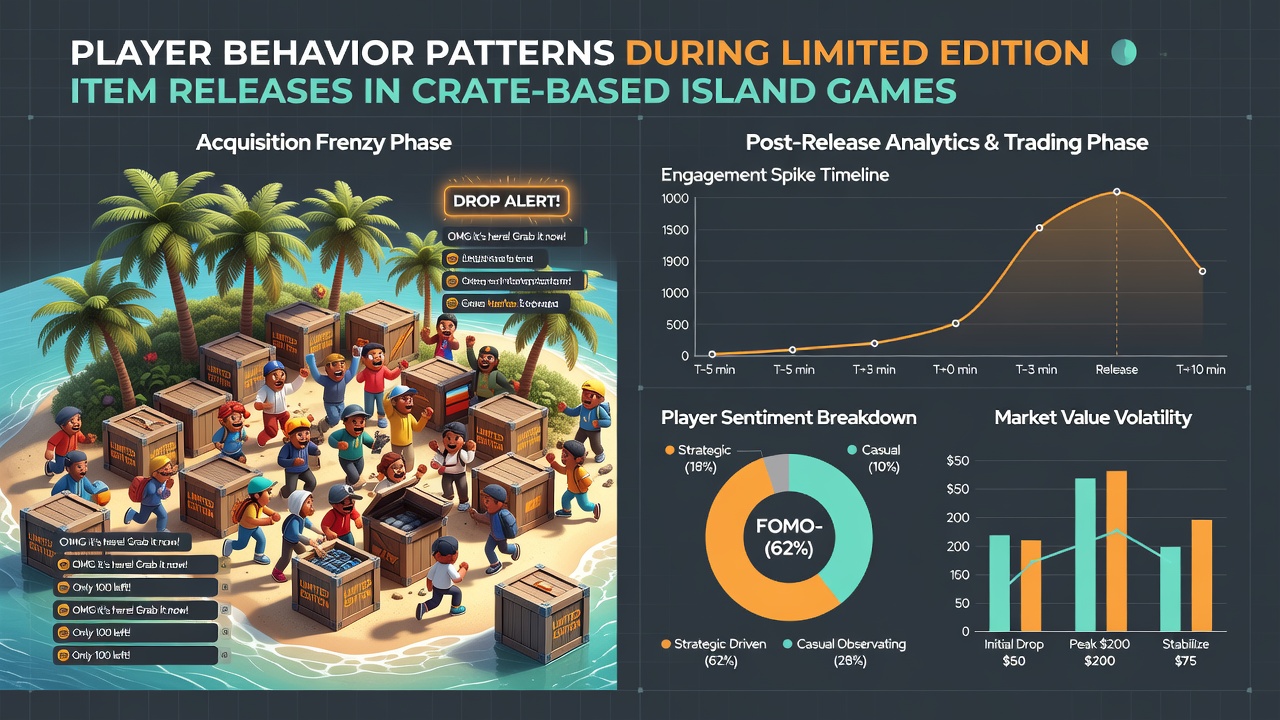
Transaction volumes for premium currency used to purchase additional crates increase noticeably once limited items appear, and records from several platforms show a 2.3-fold rise in microtransaction counts during the opening week. Players convert in-game earnings or real currency into crate openings at higher rates, while those who previously avoided paid options participate at elevated levels to chase specific cosmetic or functional rewards. Data collected across North American and European servers during the September 2026 wave demonstrated that average spend per active account reached its highest point on day three of each release cycle. Industry reports from the Entertainment Software Association confirm similar spending curves in crate-driven titles, and those figures align with patterns observed in island game ecosystems.
Community Interaction and Trading Activity
Forum posts, in-game chat volume, and external marketplace listings expand rapidly once limited edition items surface through crates, and moderators report handling three times the usual volume of trade-related messages. Players coordinate item swaps or share crate opening results in real time, while dedicated channels fill with screenshots and probability calculations. Research from academic groups at the University of Melbourne has documented how social graphs in these games become denser during limited releases, with new connections forming between previously unlinked accounts. Trading activity on secondary platforms peaks within 72 hours, after which prices stabilize as supply from repeated crate openings meets demand.
Retention and Long-Term Engagement Metrics
Retention data collected 30 days after limited edition events shows that players who opened at least five crates during the active window return at rates 18 percent higher than those who skipped the promotion entirely. Yet this uplift diminishes by the 60-day mark unless follow-up content maintains momentum. Observers tracking island game populations note that new account registrations also climb during these windows, though many of these accounts exhibit lower lifetime value compared with established players who increase activity. Figures from Canadian digital media research groups indicate that cross-promotional events tied to limited crates further boost retention among players who engage with external community features such as leaderboards or collaborative challenges.
Geographic and Demographic Variations
Patterns differ by region, and telemetry from Asia-Pacific servers during September 2026 releases displayed faster initial spikes in login activity than those recorded on North American or European instances. Younger demographics aged 18 to 24 accounted for the largest share of increased crate openings, whereas older cohorts showed steadier but smaller percentage gains. Researchers at institutions across Australia and the European Union have mapped these variations through anonymized play data, revealing that time zone alignment with announcement schedules influences how quickly behavior shifts occur. Players in regions with established evening play windows participate more consistently across multiple days, while those in mismatched zones concentrate activity into shorter bursts.
Conclusion
Telemetry and observational studies continue to document how limited edition item releases through crate systems reshape player routines in island games, and these shifts appear across login patterns, spending volumes, social exchanges, and retention curves. September 2026 data reinforced earlier findings that the first three to five days after each release represent the period of highest behavioral change, after which activity returns toward baseline levels. Ongoing analysis from multiple research bodies helps developers anticipate infrastructure loads and design follow-up content that extends engagement beyond the initial surge.