Theo Keller · 26 September 2026
Island Economy Simulations: Resource Scarcity Patterns in Randomized Container Systems During Event Cycles
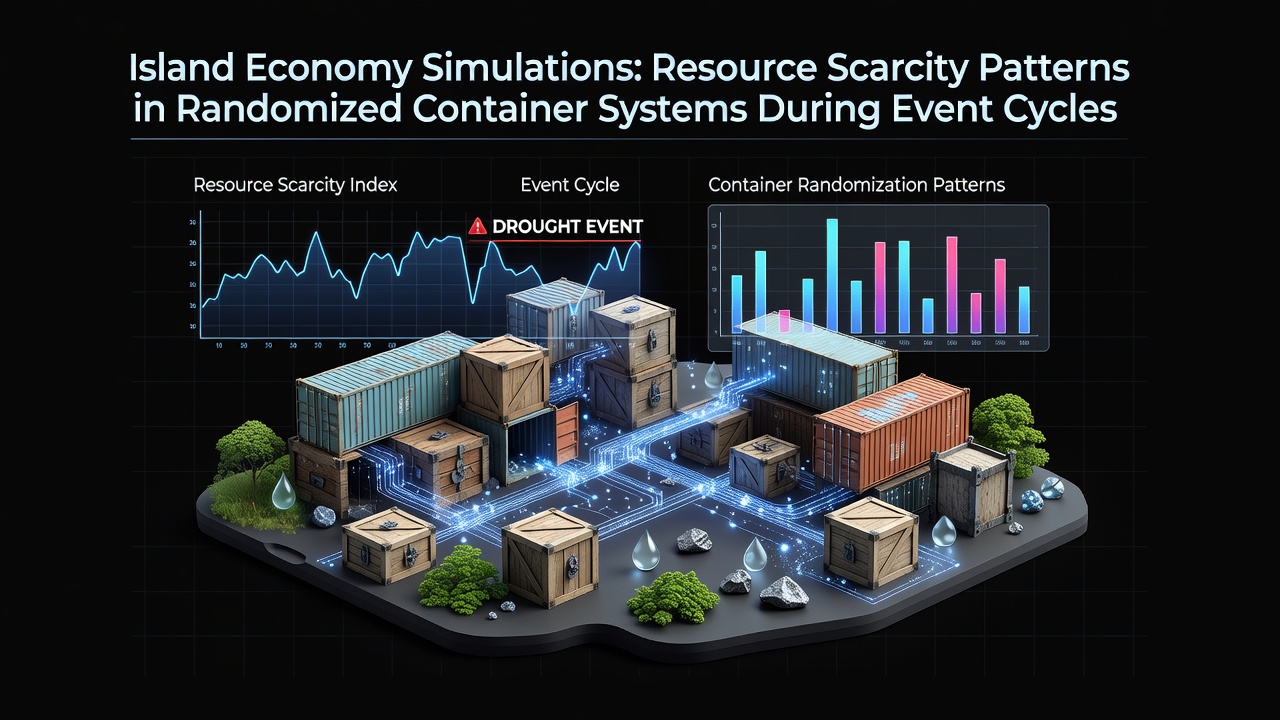
Island economy simulations model resource distribution through randomized container systems that respond to periodic event cycles, and researchers track how scarcity emerges when container outputs intersect with fluctuating demand parameters. These models replicate isolated economic environments where containers serve as primary nodes for resource allocation, each one generating variable yields based on seeded algorithms that adjust probabilities during active cycles.
Mechanics of Randomized Container Systems
Container systems operate by assigning resource types across multiple categories including food, materials, and energy units, with randomization algorithms determining payout ratios that shift according to cycle phase. Data from repeated simulation runs show that initial container fills maintain higher baseline outputs, whereas subsequent cycles introduce depletion multipliers that reduce average yields by measurable percentages. Observers note that these systems incorporate feedback loops where prior cycle consumption directly influences the next round of randomization seeds, creating chained dependencies across simulation iterations.
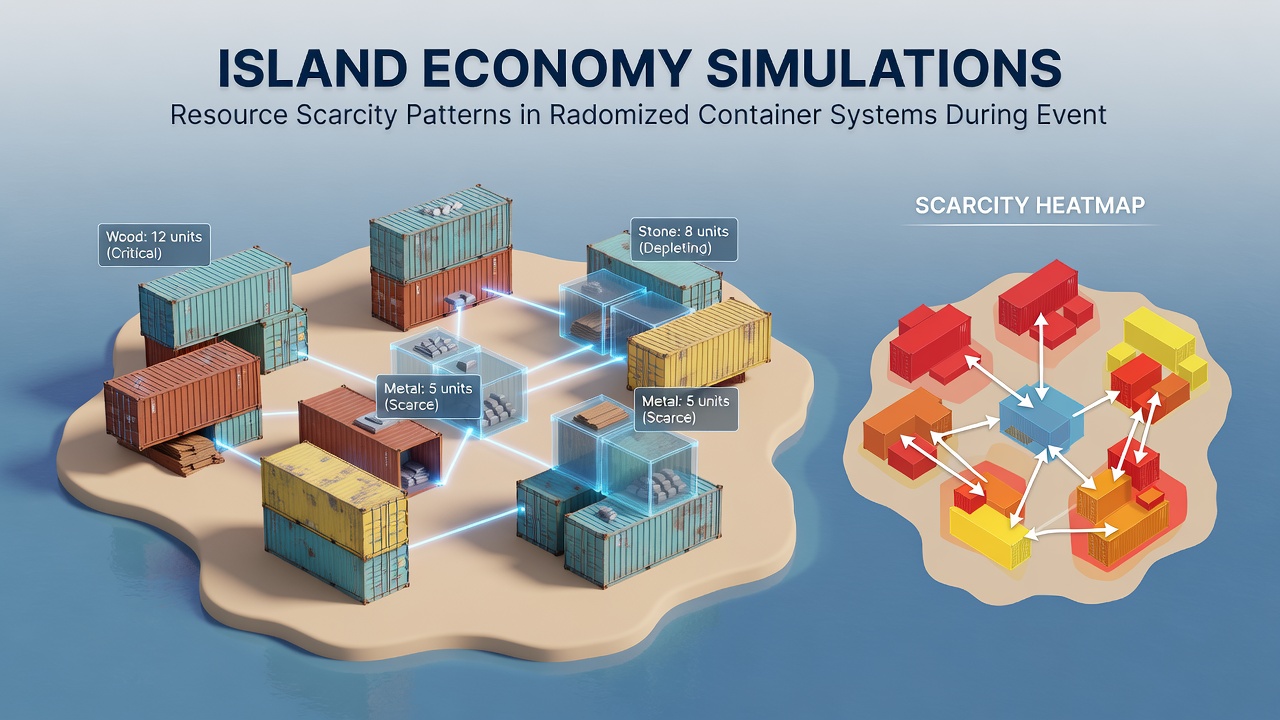
Simulation frameworks often integrate container clusters that represent geographic zones on virtual islands, and each cluster maintains independent scarcity thresholds that trigger when cumulative extractions exceed preset limits. Studies reveal that containers positioned near event hubs experience accelerated depletion rates compared to peripheral placements, a pattern confirmed through spatial analysis of output logs.
Documented Scarcity Patterns Across Cycles
Scarcity patterns develop along predictable trajectories once event cycles commence, with early phases marked by localized shortages that expand outward as container regeneration lags behind extraction volumes. Quantitative tracking indicates that food resources reach critical scarcity levels within the first third of an event cycle in most runs, while material categories sustain longer availability due to slower consumption curves. Energy units display the most volatile behavior, spiking in scarcity metrics when multiple overlapping events coincide within a single simulation window.
Analysts examining aggregated run data find that scarcity clusters form around high-density container groups, and these clusters expand when event parameters increase overall demand multipliers. Patterns further indicate that randomized systems recover unevenly after cycle peaks, leaving some resource types in prolonged deficit states even as others stabilize.
Event Cycle Influences on Resource Dynamics
Event cycles introduce timed disruptions that alter container randomization parameters, and these disruptions produce measurable shifts in scarcity distribution across the simulated islands. September 2026 simulation batches recorded heightened scarcity propagation when event cycles overlapped with seasonal demand modifiers, resulting in faster exhaustion of material stockpiles than observed in non-overlapping scenarios. The cycles themselves operate through phased activation sequences that recalibrate container probabilities at fixed intervals, and researchers document how these recalibrations compound scarcity when multiple phases align with peak extraction activity.
Models demonstrate that event intensity scales directly with scarcity duration, extending recovery periods for depleted containers by factors tied to the number of simultaneous active events. Those who examine cycle logs note that certain resource categories exhibit rebound effects once cycles conclude, yet full restoration rarely occurs before the subsequent cycle begins.
Analytical Approaches and Recorded Outcomes
Researchers apply statistical clustering techniques to identify recurring scarcity motifs within container output datasets, and these techniques isolate variables such as cycle length and container density that correlate with accelerated depletion. Reports from computational economics groups, including work referenced through the OECD economic modeling repository, outline how randomized systems generate non-linear scarcity responses when event parameters exceed baseline thresholds. Additional findings from Australian academic consortia, detailed in publications accessible via the Australian Research Council archives, confirm that spatial randomization within containers produces distinct scarcity gradients across island topologies.
Simulation outputs further reveal that scarcity patterns intensify under conditions of reduced container regeneration rates, and these conditions arise naturally during extended event sequences. Data aggregation across thousands of runs establishes baseline metrics for scarcity onset, allowing comparative analysis between isolated cycles and those featuring chained event triggers.
Conclusion
Island economy simulations continue to supply detailed records of how randomized container systems generate and sustain resource scarcity during event cycles, with patterns documented through quantitative tracking and spatial mapping. The interplay between container outputs, cycle phasing, and demand fluctuations produces consistent structural outcomes that researchers catalog for further model refinement. These findings contribute to broader understanding of scarcity mechanics within constrained economic environments.